
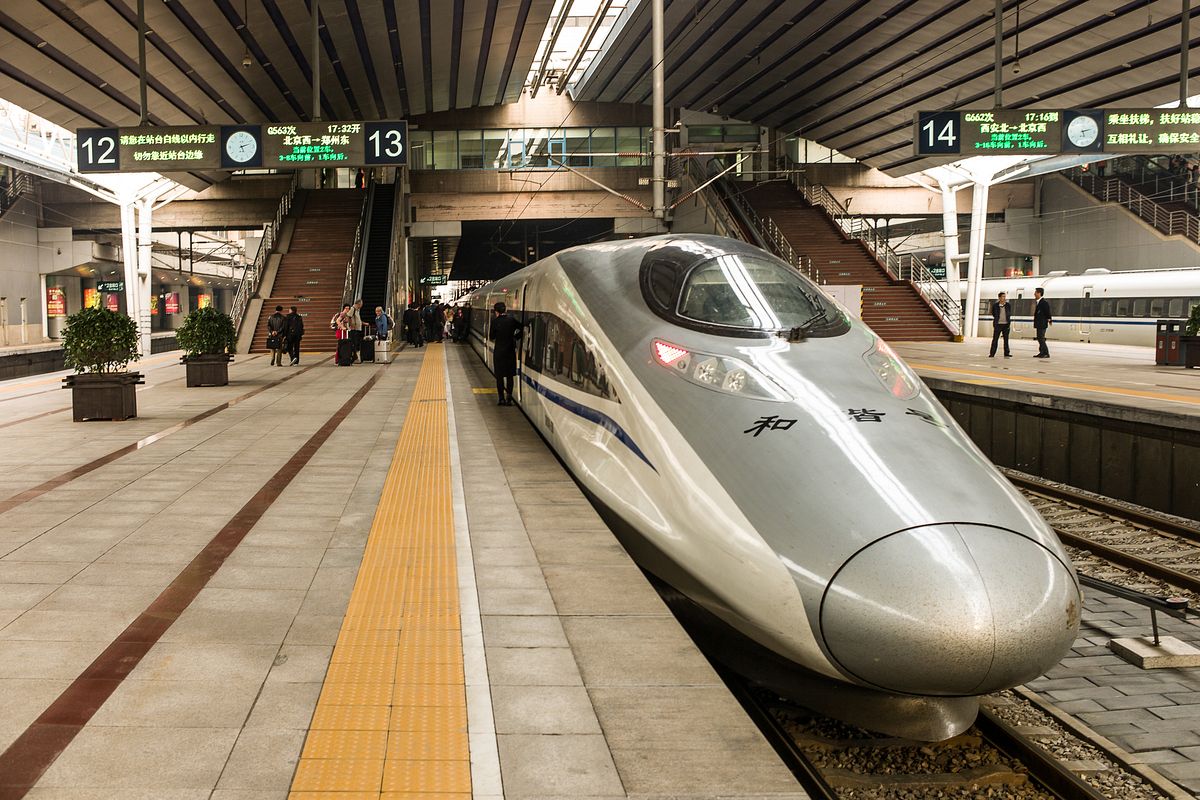
For nearly a decade, the vision has been enticing: step off an international flight at Suvarnabhumi Airport and board a sleek high-speed train bound for Pattaya in little more than an hour. This ambitious 220-kilometer rail link connecting Don Mueang, Suvarnabhumi, and U-Tapao airports was conceived as the backbone of Thailand’s Eastern Economic Corridor (EEC), a 50 billion dollar development strategy aimed at transforming the eastern seaboard into a regional business and technology hub.
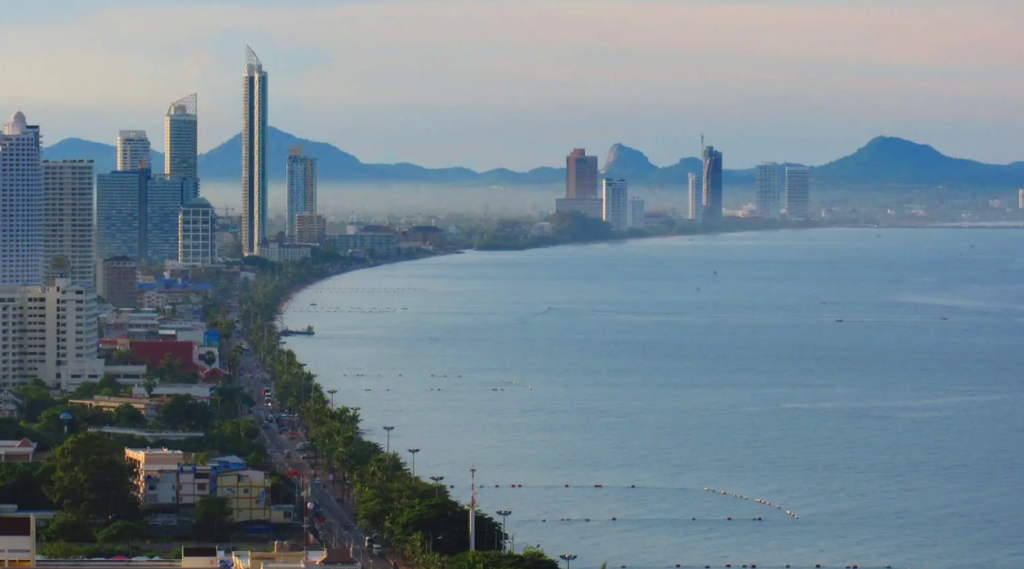
However, as of mid-2026, the project’s status remains frustratingly uncertain. Let’s examine where things stand and what the line would mean for the Pattaya Bay area economy if it ever becomes operational.
Current Status: Stalled but Not Dead
The high-speed rail project has become a masterclass in how not to build infrastructure. Originally signed as a public-private partnership in October 2019 with the Asia Era One consortium led by Charoen Pokphand (CP Group), the 7.4 billion dollar project has faced nearly every obstacle imaginable.
Land acquisition proved painfully slow, utility relocation became bogged down, and the COVID-19 pandemic disrupted financing and passenger forecasts. The pandemic was particularly damaging as Asia Era One invoked force majeure, unable to pay the 10.67-billion-baht concession fee for the Airport Rail Link or secure sufficient financing. According to State Railway of Thailand Governor Anan Phonimdaeng, lenders have lost confidence in the project’s commercial viability following the COVID-19 pandemic and subsequent economic downturn.
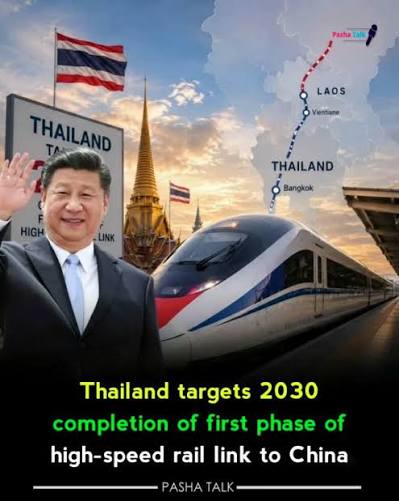
Recent reporting indicates that parties have agreed in principle to a revised contract. As of February 2026, the State Railway of Thailand announced expectations to sign the revised contract by July 2026, with construction potentially beginning in August 2026 and service projected to start in 2032. However, these timelines must be viewed with caution as the project was originally supposed to open in 2025, and earlier projections consistently proved optimistic.
Political headwinds have also derailed progress. Under the administration of Prime Minister Anutin Charnvirakul, the Ministry of Transport raised 18 legal objections to contract revisions. Transport Minister Phiphat Ratchakitprakarn rejected a build-and-pay structure, insisting government payments should occur only after project completion, effectively scrapping a five-point compromise that had been laboriously negotiated.
What the Rail Line Would Mean for Pattaya’s Economy
If the project eventually overcomes these hurdles, the economic implications for the Pattaya Bay area would be transformative.
Demographic Transformation
Pattaya is already transcending its reputation as a short-term holiday destination. The high-speed rail would accelerate this shift dramatically, transforming the city from a weekend escape for Bangkokians into a primary residential hub for professionals powering Thailand’s new industrial age. Property analysts note that the current market is being shaped by real demand from high-skilled technical specialists recruited for EV and digital sectors, expatriate executives overseeing logistics operations in the EEC, and modern families seeking coastal lifestyle without sacrificing professional opportunities.
Property values in Pattaya have already grown at an average of 5 to 7 percent annually over the past decade, largely driven by EEC-related investment. Developers are pivoting away from luxury high-rises toward landed estates and community-focused housing, recognizing that new buyers are looking for permanent residences rather than holiday rentals. The recently launched REKHA Pattaya luxury housing project, with units priced between 16 and 30 million baht, explicitly targets EEC executives and their families.
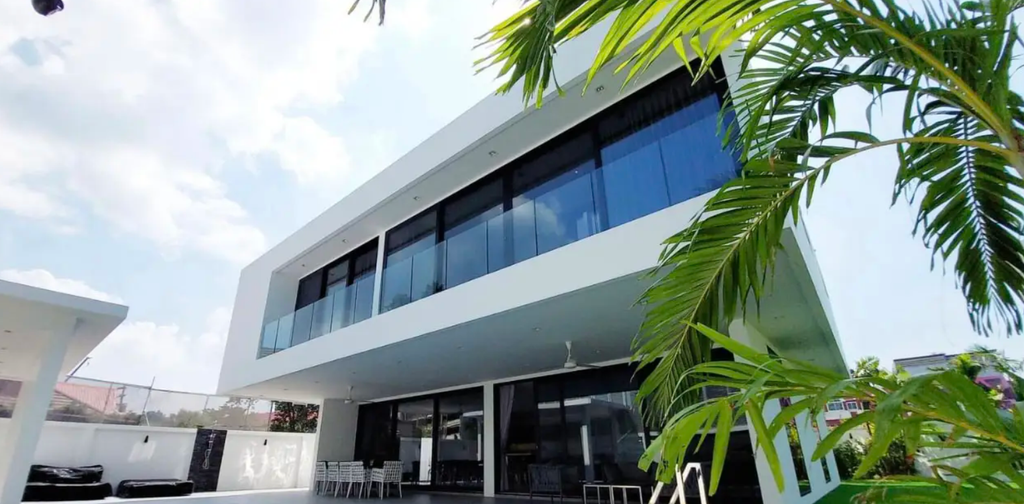
Like this amazing home in Pattaya with built in Cinema and spa
Tourism and Connectivity Benefits
With Suvarnabhumi handling over 95 million passengers in 2025 and Pattaya receiving more than 10 million international visitors annually, connecting them with fast, reliable rail would generate enormous economic benefits. The journey would be cut to approximately 45 to 60 minutes, making Pattaya far more accessible for business travel and weekend trips.
Transport Minister Pipat Ratchakitprakarn has even proposed Magnet Projects including a potential Disneyland-style amusement park and an 80,000-seat national stadium in the EEC specifically to ensure sufficient passenger volumes for the rail line. These developments would further cement Pattaya-Chonburi as a regional entertainment and sports hub.
A New Metropolis on the Horizon
Even without the rail line, the EEC is moving forward with EECiti, a 1.1 trillion baht megacity project on 14,619 rai near Pattaya in Huay Yai. Planned in three phases through 2039, this new metropolis would include residential areas, office complexes, financial centers, medical facilities, and a high-tech recreation park. The EEC office emphasizes the rail line would be supplementary as existing highway infrastructure already provides adequate access.
Conclusion: Cautious Optimism for Real Estate Investors
For potential investors in Pattaya real estate, the high-speed rail project represents both opportunity and risk. The project’s current status is best described as progressing slowly as negotiations continue, but major construction remains stalled.
However, the structural transformation of Pattaya is already underway regardless of the rail line’s timeline. The EEC’s industrial investment, the influx of high-skilled workers, and the planned EECiti megacity are reshaping Pattaya’s identity from tourist destination to permanent residential hub. The rail line would accelerate and amplify this transformation, but the underlying economic fundamentals remain strong.
For those willing to take a long-term view, locations around Nong Prue and the planned station corridor may become increasingly important as infrastructure plans move forward. The reality remains that even if the contract is signed in 2026, service may not begin until the early 2030s, a timeline that requires patience but offers substantial potential rewards.